Showing posts with label Reading. Show all posts

9.30.2013

Book Review: The Derision of Heaven

I am a little behind on posting this because I had a very busy week last week, but I just wanted to share The Derision of Heaven by Michael Whitworth. I had previously read and reviewed The Epic of God, Whitworth’s book on Genesis, and since I enjoyed that book so much, I made sure to check out The Derision of Heaven, which focuses on the Book of Daniel.
a little bit about

If anything, I think I liked Derision even more than Epic. Part of this may have been because I read it in paperback rather than a digital version (I am old school when it comes to reading), but it was a really good book, and possessed the same tandem of qualities that made its predecessor such a joy to read as well: a balance between style and substance. By that, I mean that the book is very readable while still being very well-researched.

Before I get into the good stuff (sharing my favorite quotations), let me just add one point. The Book of Daniel is 12 chapters long. The first six chapters consist of relatively straightforward historical narrative, while the last six are filled with wild apocalyptic prophecy. Based on those last six chapters, all sorts of people have predicted all sorts of things, usually with little success. One of the things I appreciated most about this book was the author’s humility in interpreting these difficult passages while still covering them thoroughly and repeatedly emphasizing their main theme: God is at work behind the scenes, and is in control of the universe.

Now, on to the quotations (with my comments in brackets):

“As long as God lives and reigns, his people have hope. Christians should never fear the state; the book of Daniel assures us God has numbered the days of every wicked leader who wields power irresponsibly.” (6)

“Whether in times of disaster or disorientation, we can navigate turbulent waters, not by being the strongest, savviest, or most obnoxious, but by being faithful to God and bringing him glory as Daniel did.” (25)

“Being a light in the darkness doesn’t require our being a burr under the saddle.” (27)

“To pretend that our own political leaders hold office by the will of the people and not also by the will of God is to foolishly assume that these two things are mutually exclusive. They are not.” (38)

“Our personal talents and abilities matter less than our humble willingness to be used by God for his glory.” (39)

“Empires and superpowers rise and fall at God’s will. It’s this realization that causes me to be quite concerned about those Christians who seem prouder to be an American than a member of the church, God’s eternal kingdom, one that cannot be shaken…it’s not a sin to be a patriot unless patriotism becomes your idol. I wonder if some Christians aren’t bigger fans of the Constitution than the gospel.” (48-49) [I agree with his concern and frustration. Many who claim to be Christians take to social media with more passion over some political issue than they ever show on behalf of Christ. Sad but true.]

“Our attitude and behavior when under trial is a powerful testimony to the glory and love of God.” (65)

“In God’s way of working, progress and success often occur so slowly that they are unobservable.” (98)

“I want you to appreciate the tension that exists between “God can” and “God will.” We live our lives within that tension. We know God can do something about our suffering, but will he? In this tense area of in-between is where Satan thrives. In this soil, he plants seeds of doubt in our hearts and nurtures them until they have borne the ugly fruit of indignation, rebellion, and death. But there is something we can place in that gap to frustrate Satan’s schemes—not faith in God’s deliverance, for he does not always do so, but confidence that God will do what’s ultimately best for us. God always does whatever will bring him glory, and God glorifying himself is what is ultimately best for us.” (111) [This is such an important idea, I think, that I gave it its own post. The sooner we can understand and embrace this tension, the better it will be for our spiritual maturity and our own peace of mind.]

“You and I would be better off if we spent less time worrying about gun control, runaway deficit spending, and where/how long the president spends his vacation. We would be better served worrying less about how Liberals, Conservatives, Muslims, Atheists, or others not like us are destroying America. Instead, how would things be different if we confessed daily that Jesus, even now, held dominion over all the earth? What would it look like if we spent more time urging people to willingly kneel before King Jesus now before being compelled to do so on the final day? What would it look like if more Christians spent less time griping about earthly empires destines for history’s trash heap, and celebrated instead Jesus’ indestructible and eternal kingdom?” (132) [This is kind of a soapbox, but a much needed one. I completely agree with him.]

“In the dark days that lie ahead, let us resolve to fight God’s way, not the world’s way.” (185)

Hopefully, these quotations give you a taste of the book, and make you want to get a copy to read yourself. It would be an invaluable resource for anyone preparing to teach or preach on Daniel, but also beneficial for personal Bible study as well.

7.24.2013

Book Review: “The Epic of God”

Last night I finished reading Michael Whitworth’s The Epic of God, which is a guide to the Book of Genesis (rather than a full commentary), and it was a really good book.

The Epic of God is not written to be a scholarly commentary, and there’s absolutely nothing wrong with that. In fact, I would argue that what Whitworth has done is equally if not more valuable: he has produced a text which is informed and supported by scholarship (it is a well-researched book) but is easily read and understood by the average Christian. This is an important accomplishment, and I am always appreciative of efforts which bridge the gap between the church and the academy.

Anyway, I wrote a somewhat more in-depth review on the book’s Amazon page, but here I just wanted to do what I enjoy—share good quotations! Here they are (with my comments in brackets):

“After Adam was created and placed in Eden, he was given the task of working and keeping the garden. Work is often though to be a consequence of the Fall, but notice that in the perfect world that God created, man was created to work as a means of glorifying the Lord.” (26) [Amen! Work is a good thing!]

“Sin is not a blunder we can flippantly dismiss with ‘Everyone makes mistakes.’ A mistake is wearing two socks that don’t match; sin is an offense and abomination against a holy God. Our sins cost God the life of his Son.” (79)

“There is never an excuse to be selfish with God’s blessings.” (120)

“The God of Abraham has fixed an appointed time, unknown to all but him, when all suffering will come to a fantastic end! It will be the moment when the Son comes to be glorified with his church and render awestruck all who have put their faith in him…knowing that our heartache will eventually give way to hallelujahs can help us bear the pain a little while longer. God sees. God knows. God cares. He has appointed a time when he will visit his people in their distress and bring with him the redemption of the ages!” (165) [One of the definite strengths of the book is the way the author ties the story of Genesis into God’s greater story of the redemption and salvation of his creation.]

“And this is the truth that Abraham discovered on that occasion, that God’s commitment to justice is greater than our own…But his commitment to mercy is equally greater than our own.” (167-68)

“The life of faith is an odyssey of unexpected twists and turns.” (190) [This has certainly been true in my life!]

“If you are having difficulty surrendering to God what is most valuable to you, perhaps you have never acknowledged it as coming form him to begin with.” (215) [Ouch.]

“Prayer is for our benefit, not God’s. Praying for something that is in the will of God shapes us spiritually in ways few other things can. God’s desires become our own, and we start to see things as he does.” (232-33)

“It is natural and healthy for parents to want their children to succeed in every area. But what shall it profit a child if he becomes a Rhodes scholar or wins the Heisman trophy, yet loses his soul? (303) [Yeah, I wish every youth group parent I have or will ever have would read this quote about three times a day.]

“It is not healthy, not does it deepen our faith, to play the what-if game…when we find ourselves in the throes of suffering and pain, we must refuse to play the what-if game. Ask instead, ‘What if God is greater than my current circumstances? If God is indeed working out a plan to bring himself greater glory, how should I react?’ Then respond accordingly, confident that he can use our disappointments to deepen our faith and bring our lives into greater harmony with him.” (327) [This was very helpful for me to read, as I struggle with playing the what-if game.]

“We frail and pathetic humans have a bad habit of gauging God’s presence based on our circumstances…But veterans of the life of faith know that circumstances are no better a barometer of whether God is with you than overcast skies are proof that the sun has vanished completely.” (329) [Wow.]

I know that was a lot of quotations, but like I said, it was a really good book! The Epic of God will  deepen your understanding of the Book of Genesis, but more importantly, it will deepen your faith as well!

7.12.2013

Book Review: “Why They Left”

For quite some time I’ve wanted to read, “Why They Left: Listening to Those Who Have Left Churches of Christ,” by Flavil R. Yeakley Jr. This week I finally got around to doing so, and am glad that I did—it’s a great book.

The title is pretty self-explanatory, but basically, Dr. Yeakley (a long-time preacher, university professor, and statistician) conducted 325 surveys of people who had left the fellowship of Churches of Christ and then categorized and responded to the reasons they had for doing so.

The insights gleaned from those who left are helpful, but equally useful (if not more so) in the book are Yeakley’s brief but thoughtful responses to some of the issues which those who have left brought up. The book is an easy read, and I was surprised at how good of a writer Yeakley was (I don’t know why I was surprised; I guess I assumed that a statistician would produce a boring book, but it was an excellent read overall).

Here are some of my favorite quotations from the book (with random thoughts by me in brackets):
“When the average parents in the congregations attend regularly and have specific church work assignments, their children are much more likely to remain in Churches of Christ after they grow up and leave home. The retention rate in those churches was around 75 to 80 percent. In congregations where the average family has one parent who is an active and involved member but the other is not, the retention rate was around 50 percent. In churches where the typical family was one in which neither parent was active and involved, the retention rate was around 20 to 25 percent.” (40) [The youth ministers reading this are amen-ing out loud and trying to figure out the best way of sharing this quotation with all of their parents.] 
“…We should recognize that campus ministries are partners in Christian higher education. We should support the few campus ministries that Churches of Christ already operate, and we should establish many more.” (44) 
“The conclusion based on these positive and negative references to judging [in the New Testament] seems obvious to me. Christians should judge to distinguish between truth and error, right and wrong, or good and evil. It is acceptable for Christians to judge to settle disputes between or among brethren. Christians must judge the conduct of other Christians who sin and refuse to repent in spite of repeated admonitions. Christians must judge doctrines and practices. But we are not supposed to judge the heart, the motives or the eternal destiny of another person. We must leave it to God to pronounce the final judgment.” (62-63). [This is excellent. Yeakley’s discussion of NT passages on judging and his synthesis of them is almost an aside to the book, but the book would be worth reading just for this.] 
“Grace must never be used as an excuse for failing to correct known errors in our lives or in our understanding of God’s will.” (63) [I love this. It is almost worthy of a t-shirt or a bumper sticker.] 
“Churches of Christ reject…‘Once saved always saved’…but a doctrine of ‘If saved, barely saved’ is just as wrong.” (70) 
“My personal observation is that in far too many Churches of Christ, the elders are doing deacons’ work; the deacons have very little to do; and the church-supported ministers do most of the pastoral work. If strategic planning is done at all, it is done by ministers.” (141) [I think this is an accurate statement. I am thankful that the leaders of my congregation are working hard to get away from this mindset.] 
“Christ did not accept us on the basis of our perfect understanding or our perfect obedience. He accepted us because of our acceptance of Him.” (201) 
“The more friends new members make in the church the less likely they are to leave the church…the sooner new converts get involved in some area of ministry the more likely they are to stay in the church.” (208)
If you are a member of a church of Christ and are concerned about the future of Churches of Christ and are interested in doing what you can to help minister to the people in our churches, I highly recommend this book.

6.04.2013

Being Humble About Our “New Interpretations”

Some more good stuff from Jonathan Pennington’s Reading the Gospels Wisely on the importance of
studying the history of the interpretation of the biblical text:
“Any time we think we have come up with a new and insightful interpretation, the odds are that someone has already had this insight and expressed it better; conversely, if we do arrive at an entirely new interpretation, then chances are, if none of the tens of thousands of students of Scripture have ever seen things that way, that interpretation may have serious weaknesses and blind spots.”
So basically, if you’re reading Scripture and feel like you’ve come upon a new and brilliant interpretation of a verse or passage that you’ve never heard before, do a little research: most likely someone else has already developed that same interpretation and has done so in a better and more thorough way. And that’s a good thing, because it leads to a deeper understanding of the Bible.

And it’s also possible (though unlikely) that your research will show that you have, indeed, come up with a new interpretation that no one else has ever thought of before. If that’s the case, your new interpretation is most likely flawed.

Either way, I think researching and reading the interpretive views of others is helpful in determining accuracy, and also leads to humility as well. Both are good things.

5.23.2013

Reflecting on Religious and Theological Disagreements

As a theology grad student, I read a ton of stuff about religion, theology, and doctrine from a wide variety of sources. I also hear a lot of podcasts, sermons and devotionals. And some of the stuff I read and hear is really, really good, but some of it I’m not too sure about and some stuff I think is absolutely wrong.

There was a time in my life when I was greatly disturbed anytime someone disagreed with me about theology, and felt a compulsion to try to convince them that I was right. I still feel this way at times especially if the issue at hand is one that I think is of essential importance.

That being said, I have come to understand something which I think is very important: I can still respect someone’s opinion even if I disagree with it. 

Sounds pretty simple right? And it is simple, but it’s not all that easy—just look at all the religious, political, and cultural debates that surround us and see how often respect is completely left out of them.

When it comes to matters of theology, even if I disagree with you, I can respect your opinion if the following two characteristics are true:

(1) You are a person of integrity. Maybe this is obvious, but I’m going to tend to be skeptical about what you’re telling me if you’re not a very good person. If I don’t see the Fruit of Spirit in your life, why would I think that you have an exemplary understanding of the character and nature of God?

(2) Your viewpoint is not shallow. I am not going to be impressed with your argument if it is based on some hunch or feeling or tradition or something your pastor told you that you cannot support with Scripture. If we have a difference of opinion about how a particular biblical passage should be interpreted, that’s a different issue, but if you’re making no attempt to be anchored to the Word in the first place, we’re going to have a problem.

If you meet these two qualifications, we might disagree on some things (and we almost certainly will), but I can still respect you despite those disagreements.

4.03.2013

Reading and Walking

I have to read a lot for grad school, and sometimes my reading assignments stack up to the point that I have to spend hours and hours reading in a given day. Sometimes this can be hard to do, because the reading is occasionally not the most interesting material in the world, and if I read while sitting back in my chair or laying down, it’s easy to fall asleep. 

So recently, I have come upon what seems to be a great solution: I walk laps in the church auditorium while doing my reading. So far, I have noticed at least three benefits:
  • Since I’m walking while reading, it’s pretty difficult to fall asleep. Along the same lines, it’s easy for me to read for longer periods of time this way.
  • Spending my reading time in the auditorium rather than the office tends to minimize distractions (the temptation of having my computer nearby, phone interruptions, questions, etc.).
  • I get exercise while being at work!
The last point is perhaps more significant than I originally thought. Yesterday I had quite a bit of reading to do, and ended up walking 190 laps around the church auditorium. I also paced off the distance of one lap, and determined that it comes out to about 74 yards. When I did the math, I was surprised (but pleased) to discover that I had walked almost 8 miles!

I am excited about this and hope to make it a habit, at least for those times when I have a lot of reading to do (not all activities can be done well while walking laps). I need to start wearing better shoes to work though!

3.18.2013

How Do You Read?

I enjoy reading and write about books quite a bit. Growing up I read a lot, but that slowed when I went to college and got busy with a lot of other things. After college I settled into adult life, and picked up the habit again. 

When I started graduate school in 2010, I knew I would have a ton of school-related reading to do and I was afraid that this would cause me to dislike reading, but instead, the opposite happened: I now want to read all the time, and I have a long list of books to read in addition to my required reading for school. 

For most of my life, I have been a guy who read one book at a time. This trend changed in grad school where time constraints required me to overlap the books I was reading, and gradually I have come to enjoy reading multiple books at once. That being said, I realized last week that this Reading Multiple Books At Once thing has really gotten out of hand. 

Concurrently, I was reading:
  • Two books on ministry in small churches
  • Two books on youth ministry (actually I finished one and then immediately started and quickly finished another)
  • One book on the history of Churches of Christ in the 20th century
  • One book on biblical exegesis
  • One book on Genesis
  • One book of daily devotionals
  • One book based on the sermons and writings of Archbishop Oscar Romero
  • A lesson book on Ephesians for my Sunday morning Bible class
  • The Bible (specifically, I am in Psalms right now)
Let me just say: this is a terrible way to read. My attention is so split that it is particularly difficult to remember exactly where I read something. I am also completely out of bookmarks (which are very necessary, since I have no way of remembering my place in 11 different books).

Furthermore, reading this many books simultaneously is not a sign that I am smart for being able to balance them; it is a sign that I am dumb for trying to do so in the first place!

By nature, a few of these books are part of my daily or weekly routine (Bible, devotionals, Bible class), but other than these, I’d like to get back to just reading 1-3 other books at a time.

1.08.2013

Reading in 2012


I like statistics, I like making lists, and I like competing with myself, so a few years ago I started keeping track of the books I read each year.

Here is my reading list for 2012:
  1. Garden of Beasts, by Jeffery Deaver 
  2. In His Steps, by Charles Sheldon 
  3. Jesus and Jonah, by J. W. McGarvey 
  4. How we Got the Bible, by Neil R. Lightfoot 
  5. Mystic River, by Dennis Lehane 
  6. Killer Angels, by Michael Shaara 
  7. Watchmen, by Alan Moore 
  8. Biggest Brother: The Life of Major Dick Winters, the Man who Led the Band of Brothers, by Larry Alexander 
  9. The Devil in the White City, by Erik Larson 
  10. Batman: The Dark Knight Returns, by Frank Miller 
  11. The Days of My Life, by George L. Dockery 
  12. Sticky Faith: Everyday Ideas to Build Lasting Faith in your Kids, by Kara E. Powell and Chap Clark 
  13. V for Vendetta, by Alan Moore and David Lloyd 
  14. Will God Run?, by Charles Hodge 
  15. For Freedom: The Biography of John Nelson Armstrong, by L.C. Sears 
  16. Determining the Form: Structures for Preaching, by O. Wesley Allen Jr. 
  17. Greek To Me: Learning New Testament Greek Through Memory Visualization, by J. Lyle Story and Cullen I.K. Story 
  18. Steeped in the Holy: Preaching as Spiritual Practice, by Raewynne J. Whiteley 
  19. The Practice of Preaching, by Paul Scott Wilson 
  20. The Witness of Preaching, by Thomas G. Long 
  21. Emergence of the “Church of Christ” Denomination, by David Edwin Harrell 
  22. The Mystery of Cabin Island, by Franklin W. Dixon 
  23. The Sinister Signpost, by Franklin W. Dixon 
  24. A Study in Scarlet, by Sir Arthur Conan Doyle 
  25. In the Garden of Beasts, by Erik Larson 
  26. Southern Horrors: Lynch Law in all its Phases, by Ida B. Wells 
  27. Hub Fans Bid Kid Adieu, by John Updike 
  28. Fielder from Nowhere, by Jackson Scholz 
  29. The Status of Missions in Churches of Christ: A Nationwide Survey of Churches of Christ, by Gailyn Van Rheenen and Bob Waldron 
  30. The Fall of the House of Usher, by Edgar Allan Poe 
  31. The Darth Side: Memoirs of a Monster, by Cheeseburger Brown 
  32. Encountering Missionary Life and Work: Preparing for Intercultural Ministry, by Tom Steffen and Lois McKinney Douglas 
  33. Christianity in Culture: A Study in Biblical Theologizing in Cross-Cultural Perspective, by Charles H. Kraft* 
  34. The Church of Christ in the 21st Century, by Mark Adams 
  35. Reading New Testament Greek: Complete Word Lists and Reader’s Guide, by Bernard Brandon Scott, Margaret Dean, Kristen Sparks, and Frances LaZar 
  36. The Mark on the Door, by Franklin W. Dixon 
  37. It’s Still Greek to Me: An Easy-to-Understand Guide to Intermediate Greek, by David Alan Black 
  38. Set Free? Stay Free! The Fallacy and Failure of Legalism, by Larry Deason 
  39. Using Twitter Effectively as a Congregation, by Adam Faughn 
  40. Is The Bible Really Completely True? A Deeper Understanding of Biblical Inerrancy, by Matt Robertson 
  41. Friend-O-Nomics: How Friendliness Can Make Your Youth Ministry Grow, by Rick Lawrence 
  42. A Church That Flies: A New Call to Restoration in the Churches of Christ, by Tim Woodroof 
  43. My Friend Dahmer, by Derf Backderf 
  44. Stars in the Shadows: The Negro League All-Star Game of 1934, by Charles R. Smith Jr. 
  45. The Story, by Biblica**
I stated at the beginning of last year that I intended to write more book reviews in 2012, but I didn’t do very well in that regard. I would like to do better in 2013, but I also realize that for whatever reason, I hate writing book reviews so I’m not sure that I will. Still, even if I don’t write formal reviews, I will try to share helpful quotations and ideas from books that I enjoy.

I read some really good books in 2012. The Devil in the White City and Mystic River were both great (though disturbing), and I also enjoyed Biggest Brother and Killer Angels. Moving over to biblical and theological books, For Freedom was an excellent biography on J.N. Armstrong, the first president of Harding University, and a helpful window into Restoration Movement studies as well. How We Got The Bible was a useful primer on the history of the Bible, The Church of Christ in the 21st Century is an excellent book for Bible class study, and The Status of Missions in Churches of Christ was a very helpful survey book which every Church of Christ elder and minister should read. Undoubtedly though, the gem of the year was Sticky Faith: Everyday Ideas to Build Lasting Faith in your Kids. This is a wonderful book which I believe should be read by every minister and Christian parent in the world. Seriously (it’s so good I just linked to it!).

Disappointing books that I read in 2012 include In His Steps (why is this book famous?), Is The Bible Really Completely True? (a very poor and barely coherent defense of inerrancy), In The Garden of Beasts (which was pretty good, but just disappointing after reading The Devil in the White City), and Christianity in Culture (which was truly unreadable). I also forayed into the graphic novel medium in 2012, but was rather disappointed by some of its highly-rated volumes: Watchmen, V for Vendetta, and Batman: The Dark Knight Returns (none of them were awful; neither were they very good).

My overall book total increased from 39 in 2011 to 45 in 2012. Realistically, I think this is about my limit. Maybe I could push it to 50, but with the delicate time balance that I currently maintain, I’m fairly pleased with this amount.

I’ve already started reading in 2013 and have a long list of books to read (I got 15-20 books for Christmas!), but I’m also interested in the recommendations of others. What were your favorite books from 2012?

(For comparison’s sake, you can see the books I read in 201120102009, and 2008).

*Full disclosure: I didn’t read this entire book. I read the first 1/3-1/2, and then skimmed the rest because of time constraints (it was an assignment for a class). As I mentioned above, I thought it was almost unreadable—some good ideas, but in need of significant editing.
**This was part of Biblica’s new Bible translation which puts the NIV in chronological order and removes chapter and verse numbers to make the text more readable. “The Story” was a compilation of Luke and Acts which we used for our youth group Bible class this past quarter. Since it was self-contained and over 100 pages on its own, I listed it on my reading list separate from my regular Bible reading for the year.

6.13.2012

Preaching On My Mind


As an Associate Minister, preaching is part of what I do. Normally, I preach once a month, which generally means that I spend about three weeks being consumed by other duties and responsibilities, and then I focus in on preaching for a week or so before my turn in the pulpit comes.

Recently though, I have had preaching on the mind for several reasons:
  • In about two months’ time (late April through late June), I will have preached nine times. Two of the sermons were for weddings (which are different than regular sermons but present their own challenges), three will have been at Farmington, one at a youth retreat, one at our summer church camp, one for a grad school class, and one for another local congregation. Because of the specific circumstances surrounding many of these engagements, most of these sermons cannot be recycled. For a guy who usually prepares one sermon a month, that’s a lot of preaching.
  • As I alluded to above, I am currently in a preaching class as part of my grad school program (in fact, I’m actually in Memphis all week for class, which explains my lack of activity here on the ol’ blog). As a part of this class, I have learned a ton about the theory and theology behind preaching, and it has left me incredibly convicted about the importance of it all. And I’ve experienced the joy (sarcasm alert) of preaching in front of my classmates and having my sermon examined and evaluated for strengths and weaknesses.
  • Related to the class I am taking, I’ve read four books on preaching over the last six weeks or so which have taught me much about sermon form and composition that I never even suspected before. 
  • Last month it was announced that our preacher, who has been my coworker for several years and is a good friend of mine will be moving before the end of the year and will begin another ministry with another congregation. The process of searching for and hiring a preacher has been in my thoughts, both on his behalf, and on behalf of the church family at Farmington.
Maybe later I’ll have more to say about all I’ve learned in my preaching class, but at this point, it’s too early for me to clearly reflect on all of these preaching-related thoughts and happenings. 

However, one thing has been firmly impressed on my mind: God entrusted the proclamation of the gospel and thus, the belief and salvation of others, through the medium of preaching (Mark 16.15-16; 1 Corinthians 1.21). That means it’s not something to be taken lightly, but should be undertaken prayerfully and studiously.

2.27.2012

Book Review: Biggest Brother


Winters is a main character in the Band of Brothers book written by Stephen E. Ambrose and the HBO miniseries of the same name produced by Steven Spielberg and Tom Hanks, and in Biggest Brother, Alexander goes beyond Winters’ time in WWII and gives a biographic account of his life.

All in all, I thought Biggest Brother was good but I didn’t love it. First, the account of the most exciting part of Winters’ life—his time with Easy Company of the 101st Army Airborne—is fairly redundant if you have already read or seen Band of Brothers. Also, in Biggest Brother Winters loses a bit of his virtuous luster, holding old grudges and giving frank and sometimes very negative evaluations of his fellow soldiers and friends. It is certainly true that becoming aware of some of Winters’s faults and shortcomings makes him more human, but it was nice seeing him as the idyllic American hero.

Of course, Winters still was a hero, and I think my favorite parts of the book were quotations from his own writing which underscore how dutiful and responsible he was:
“In three years, I’ve aged a great deal. It seems as if the college days and the days of civilian life when I did as I pleased are long gone. It must have been a dream, a small, short, but beautiful part of my life. All I do is work to improve myself as an officer, and them as fighters and as men, make them work to improve themselves. As a result, I am old before my time. Not old physically, but hardened to the point where I can make the rest of them look like undeveloped high school boys. Old to the extent where I can keep going after my men fall over and go to sleep from exhaustion, and I can keep going like a mother who works on after her sick and exhausted child has fallen asleep. Old to the extent where if it's a decision or advice needed, my decisions are taken as if the wisdom behind them was infallible. Yes, I feel old and tired from training these men to the point where they are efficient fighters. I hope it means some will return to that girl back home.”
After Germany surrendered, Japan continued to fight on, and Winters tried to explain to his mother why he felt like it was his duty to continue to fight, despite all of the work he had already done:
“I feel that God has been good enough to let me get through this war. As a result I am combat wise and ins a position to do some good to help a lot of men. I know I can do the job, better than or as well as any of the rest. How can I sit back and watch others take men out and get them killed because they don’t know; they don’t have it? Maybe I’ll get hurt or killed for my trouble, but so what if I can make it possible for many others to go home. Their mothers want them too, the same as mine. So what else can I do and still hold my own self respect as an officer and a man?”
Especially in comparison to today’s society, where words like duty and responsibility are almost entirely foreign concepts, Winters’ character shines as an example to emulate.

• • •

While reading Biggest Brother, I was struck (somehow, for the first time) how young these guys were who went out and basically saved the world. For those who have seen Band of Brothers, here are the ages of some of the major characters on June 6, 1944 (D Day).
  • Colonel Robert Sink–39 (who seemed so incredibly old in the movie)
  • Major Dick Winters–26
  • Captain Lewis Nixon–25
  • First Lieutenant Harry Welsh–25
  • Captain Ronald Speirs–24
  • Second Lieutenant Carwood Lipton–24
  • Staff Sergeant Denver “Bull” Randleman–23
  • First Lieutenant Lynn “Buck” Compton–22
  • Sergeant Donald Malarkey–22
  • Staff Sergeant Bill Guarnere–21
  • Staff Sergeant Darrell “Shifty” Powers–21

2.01.2012

Book Review: Jesus and Jonah by J.W. McGarvey

In an earlier post, I mentioned that I wanted to do a better job in 2012 of writing about some of the books I read. I’m not sure how well I will stick to that goal for the year, but here’s a brief review of one book I read last month.

Jesus and Jonah was published by J. W. McGarvey in 1896, and was actually a compilation of several articles he wrote in The Christian Standard. McGarvey is a well-known author and scholar within the Restoration Movement (and close associate of Robert Graham), and was one of the first conservative scholars to actively oppose the trends of liberal theology and higher criticism that were growing in popularity around the turn of the 20th century.

In Jesus and Jonah, McGarvey argues against a ‘symposium’ of scholars who had denied the historicity of the biblical account of Jonah. 

The book isn’t exactly a page-turner—McGarvey spends the majority of the book examining the arguments of the scholars he disagrees with, and as those scholars basically all use some form of the same 2-3 arguments, McGarvey’s responses quickly become repetitive. Nevertheless, McGarvey’s argument is sound—since Jesus certainly seems to consider the Jonah account to be historical in Matthew 24.38-39, those who argue that it isn’t are basically forced to hold to one of two positions:
  • Jesus spoke of the events of Jonah as if they were historic when He knew they were not, in which case He was being deceptive (McGarvey makes this point especially well).
  • Jesus spoke of the events of Jonah as if they were historic because He thought they were, but was mistaken. This position raises lots of questions about the nature of Jesus and the knowledge He possessed while on earth (these are questions which are easily dismissed by a lot of liberal scholars today who question or reject the divinity of Christ, but would not be as easily dismissed by the less radical scholars McGarvey was addressing in Jesus and Jonah).
All in all, Jesus and Jonah was a worthwhile read—a short book which, in my opinion, successfully achieved its aim (refuting the argument that Jonah wasn’t historical) and also provided an interesting analysis of the biblical Jonah story.

1.13.2012

Reading in 2011


Something I started doing a few years ago and have greatly enjoyed is keeping track of the books I read each year.

Here is my reading list for 2011:

  1. The Speed Of Trust: The One Thing That Changes Everything, by Stephen M. R. Covey
  2. The Historical Books (Interpreting Biblical Texts Series), by Richard D. Nelson
  3. Joshua to Chronicles: An Introduction, by Antony F. Campbell
  4. The Art of Biblical History, by V. Philips Long
  5. A Biblical History of Israel, by Iain Provan, V. Philips Long, and Tremper Longman III
  6. God’s Potters: Pastoral Leadership and the Shaping of Congregations, by Jackson W. Carroll
  7. Crossing the Wire, by Will Hobbs
  8. Leading the Congregation: Caring for Yourself While Serving the People, by Roger Heuser and Norman Shawchuck
  9. Accompany Them With Singing: The Christian Funeral, by Thomas G. Long
  10. The Alchemist, by Paulo Coelho
  11. Crucifixion, by Martin Hengel
  12. Crazy Love, by Francis Chan
  13. The Dawkins Delusion? Atheist Fundamentalism and the Denial of the Divine, by Alister McGrath and Joanna Collicut McGrath
  14. 1776, by David McCullough
  15. A Little History of the World, by E.H. Gombrich
  16. The Soul of Baseball: A Road Trip Through Buck O’Neil’s America, by Joe Posnanski
  17. Kingdom Come: Embracing the Spiritual Legacy of David Lipscomb and James Harding, by John Mark Hicks and Bobby Valentine
  18. Show Us How You Do It: Marshall Keeble and the Rise of Black Churches of Christ in the United States, 1914-1968, by Edward J. Robinson
  19. Reviving The Ancient Faith: The Story of Churches of Christ in America, by Richard T. Hughes
  20. The Death Collector, by Justin Richards
  21. The Problem of Pain, by C.S. Lewis
  22. The Greenest Island, by Paul Theroux
  23. Night, by Elie Wiesel
  24. Convicted: A Scientist Examines the Evidence for Christianity, by Brad Harrub
  25. The Restoration Movement in Northwest Arkansas, by Virginia Lynn Vego
  26. Baseball in Blue and Gray: The National Pastime During the Civil War, by George B. Kirsch
  27. The Way of Life: Church History, Reformation and Modern, by Everett Ferguson
  28. Gorky Park, by Martin Cruz Smith
  29. Pea Ridge and Prairie Grove, by William Baxter
  30. Youth: A Narrative, by Joseph Conrad
  31. The Conquest of the North and South Poles, by Russell Owen
  32. A History of Arkansas College: 1850-1860, by Robert Dockery
  33. Early Christians Speak: Faith and Life in the First Three Centuries, by Everett Ferguson
  34. Undenominational Christianity, by J.N. Armstrong
  35. The Spy Who Came in from the Cold, by John Le Carré
  36. My Turn at Bat: the Story of My Life, by Ted Williams (with John Underwood)
  37. The Third Man, by Graham Greene
  38. The Fallen Idol, by Graham Greene
  39. More Strength for the Journey: A Daily Devotional Guide, by Danny Boggs, Kirk Brothers, Bobby Dockery, and Neal Pollard
Once again, I did a poor job of writing reviews of the books I read this past year, and that’s something I hope to improve upon in 2012. Regardless of my lack of reviews, there were a few books I read that I thought were great. The Art of Biblical History and A Biblical History of Israel were both excellent, and I would readily recommend them to anyone with an interest in biblical history. Other favorites for the year included 1776 (fascinating reading on the early days of the American Revolution), Night (gut-wrenching, personal account of the Holocaust), and The Soul of Baseball, which was possibly the best baseball book I have ever read (which is saying a lot). In the category of fiction, Gorky Park and The Spy Who Came in from the Cold were both very enjoyable.

On the flip side, The Death Collector was undoubtedly the worst book I read this year (the dangers of choosing young adult audio books for my drives to and from Memphis). The only other real disappointment for the year was The Alchemist, which I had high hopes for but ended up being weird and uninspiring.

Sadly, my overall book total decreased (down to 39 from 41 in 2010). Part of this was caused by an unproductive January, and also by the fact that I took one less reading-intensive graduate course this year. Hopefully I’ll reverse the trend and be back up over 40 books in 2012.

As always, I have some books set aside to read in 2012, but I always like recommendations for good stuff. Any ideas?

(For comparison’s sake, you can see the books I read in 2010, 2009, and 2008).

8.29.2011

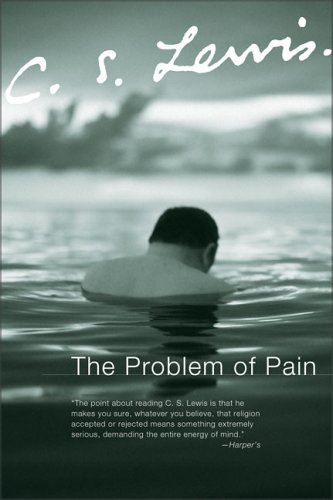
The Problem of Pain

I just finished reading C.S. Lewis’s The Problem of Pain, and rather than wait six months to write about a book like I normally do, I thought I’d go ahead and post some brief thoughts.


Compared to some of his other works (Narnia, Mere Christianity, The Screwtape Letters), The Problem of Pain really wasn’t my favorite—parts of it are somewhat hard to follow, there’s a semi-weird chapter on animals, to an extent, he seems to undermine the doctrine of the Fall, and he also suggests a Christology that is lower than I am comfortable with.

Nevertheless, it’s still C.S. Lewis, which means that there is a lot of good stuff in The Problem of Pain. Below are some quotations that I particularly enjoyed…

Free will necessitates suffering:
“Try to exclude the possibility of suffering which the order of nature and the existence of free wills involve, and you find that you have excluded life itself.”
(Lewis, p. 25)
On what we wish God was like:
“What would really satisfy us would be a God who said of anything we happened to like doing, ‘What does it matter so long as they are contented?’ We want, in fact, not so much a Father in Heaven as a grandfather in heaven—a senile benevolence who, as they say, ‘liked to see the young people enjoying themselves’, and whose plan for the universe was simply that it might be truly said at the end of each day, ‘a good time was had by all’.”
(p. 31)
One of the more famous C.S. Lewis quotes that I had heard and like before but never knew where it came from is found in The Problem of Pain:
“A man can no more diminish God’s glory by refusing to worship Him than a lunatic can put out the sun by scribbling the word ‘darkness’ on the walls of his cell.”
(p. 46)
Lewis suggests and then explains what he calls “the humility of God”:
“…It is a poor thing to strike out colors to God when the ship is going down under us; a poor thing to come to Him as a last resort, to offer up ‘our own’ when it is no longer worth keeping. If God were proud He would hardly have us on such terms: but He is not proud, He stoops to conquer, He will have us even though we have shown that we prefer everything else to Him, and come to Him because there is ‘nothing better’ now to be had…It is hardly complimentary to God that we should choose Him as an alternative to Hell: yet even this He accepts.”
(pp. 95-96)
Is it suffering of good people the hardest thing to explain? For Lewis, the answer is “no”:
“The sacrifice of Christ is repeated, or re-echoed, among His followers in very varying degrees, from the cruellest martyrdom down to a self-submission of intention whose outward signs have nothing to distinguish them from the ordinary fruits of temperance and ‘sweet reasonableness’. The causes of this distribution I do not know; but from our present point of view it ought to be clear that the real problem is not why some humble, pious, believing people suffer, but why some do not.”
(p. 104)
On the Christian’s submission of his own will:
“Christian renunciation does not mean stoic ‘Apathy’, but a readiness to prefer God to inferior ends which are in themselves lawful. Hence the Perfect Man brought to Gethsemane a will, and a strong will, to escape suffering and death if such escape were compatible with the Father’s will, combined with a perfect readiness for obedience if it were not.”
(p. 113)
An allusion to the “least of these” passage in Matthew 25 and the ethical implications of following Jesus:
“In the fullest parabolic picture which He gave of the Judgement, Our Lord seems to reduce all virtue to active beneficence: and though it would be misleading to take that one picture in isolation from the Gospel as a whole, it is sufficient to place beyond doubt the basic principles of the social ethics of Christianity.”
(p. 114)
And in reference to the flak that Christians often take for their hope of heaven (I love this quote):
“We are very shy nowadays of even mentioning heaven. We are afraid of the jeer about ‘pie in the sky’, and of being told that we are trying to ‘escape’ from the duty of making a happy world here and now into dreams of a happy world elsewhere. But either there is ‘pie in the sky’ or there is not. If there is not, then Christianity is false, for this doctrine is woven into its whole fabric.”
(p. 149)
Of course, there are other good parts to the book, but the excerpts above at least give a taste of the book’s contents.

8.25.2011

Martin Hengel’s Crucifixion

A while back, I read Martin Hengel’s Crucifixion, which is a short little book that gives scholarly treatment to the practice of crucifixion in the ancient world. In some ways, I was a little disappointed—I had hoped for more of a detailed description of what a “historically accurate” crucifixion looked like, and Hengel didn’t really provide that (largely because crucifixion was a widespread practice in the ancient world that differed depending on time, location, and whim). That being said, the book was very interesting, specifically in three respects:

(1) Crucifixion as a deterrent:
In the Roman Empire, crucifixion was rarely used on Roman citizens and was primarily used on criminals of the lowest classes and slaves. This is pretty common knowledge, and Hengel supports it. What is particularly fascinating is the degree to which Hengel argues that the use of crucifixion on slaves was a means of stirring up fear among the enslaved in hopes of preventing any sort of rebellion. In places like Rome, where the slave population outnumbered those who were free, the fear of rebellion was real, and keeping the slaves paralyzed with the fear of crucifixion was seen as necessary.

(2) Crucifixion as taboo:
Hengel also makes the argument that crucifixion was so horrific, so feared, and so reviled, that it was essentially the sort of thing that was not talked or written about. This leads to what may seem like a surprising lack of references to it in ancient sources. This lack of references doesn’t mean that the use of crucifixion wasn’t widespread (it was), but simply that it was so horrible that people avoided writing about it:
“Crucifixion was widespread and frequent, above all in Roman times, but the cultured literary world wanted to have nothing to do with it, and as a rule kept quiet about it.”
(Hengel, p. 38)

(3) Crucifixion (of Jesus) as “folly”:
The overarching claim of Hengel’s book is that the Apostle Paul’s claim in 1 Corinthians 1.18 that the “word of the cross is folly” to unbelievers is a reflection of the repeated reception that Paul would have received as he went about preaching the message of a crucified Christ.

Crucifixion was so hated and despised that, for the ancient world, following and worshipping someone who had been crucified was sheer madness—it was not a message that easily attracted followers. This part of the message has been downplayed somewhat today (largely because we fail to grasp the level of shame and horror associated with crucifixion) but at its core, the message of the gospel is completely shocking:
“…In the death of Jesus of Nazareth God identified himself with the extreme of human wretchedness, which Jesus endured as a representative of us all, in order to bring us to the freedom of the children of God…This radical kenosis of God was the revolutionary new element in the preaching of the gospel. It caused offense, but in this very offense it revealed itself as the centre of the gospel.”
(Hengel, p.89)

This last point alone makes Crucifixion worth the read, as Hengel seeks to reclaim the scandal of Christianity as central to the message of the Gospel—God loved us so much that Jesus identified with the lowest extreme of humanity in order to reclaim us.

2.18.2011

Reading in 2010


Continuing the trend I started a couple of years ago, I kept track of the books I read in 2010.

Unfortunately, I lost my reading list when my hard drive failed, which is part of the reason why it’s the middle of February and I’m just now getting around to posting the list. Also, I can’t completely guarantee the accuracy of my list, because I had to reconstruct it with the help of my awesome wife (it’s pretty close though).

Here’s my reading list for 2010:
  1. Maus I: A Survivor’s Tale: My Father Bleeds History, by Art Spiegelman
  2. Maus II: A Survivor’s Tale: And Here My Troubles Began, by Art Spiegelman
  3. The Magician’s Nephew, by C.S Lewis
  4. Men at Work, by George F. Will
  5. A Little Exercise for Young Theologians, by Helmut Thielicke
  6. A Manual for Writers of Research Papers, Theses, and Dissertations, by Kate L. Turabian
  7. The Elements of Style, by William Strunk Jr. and E. B. White
  8. The Oxford Guide to Library Research, by Thomas Mann
  9. The Black Duck, by Janet Taylor Lisle
  10. Four Views on the Warning Passages in Hebrews, edited by Herbert W. Bateman IV
  11. The River of Doubt: Theodore Roosevelt’s Darkest Journey, by Candice Millard
  12. The Bridge of Sighs, by Olen Steinhauer
  13. Call for the Dead, by John le Carré
  14. The Reason for God, by Timothy Keller
  15. The Prodigal God, by Timothy Keller
  16. While the Clock Ticked, by Franklin W. Dickson
  17. The Gospel and Letters of John, by R. Alan Culpepper
  18. John the Maverick Gospel, by Robert Kysar
  19. The God of the Gospel of John, by Marianne Meye Thompson
  20. The Gospel According to John, by D. A. Carson
  21. The Door of No Return, by Sarah Mussi
  22. Heat, by Mike Lupica
  23. The Giver, by Lois Lowery
  24. The Indian in the Cupboard, Lynne Reid Banks
  25. The Return of the Indian, by Lynne Reid Banks
  26. The Secret of the Indian, by Lynne Reid Banks
  27. Of Mice and Men, by John Steinbeck
  28. The Mystery of the Cupboard, by Lynne Reid Banks
  29. The Key to the Indian, by Lynne Reid Banks
  30. Blockade Billy/Morality, by Stephen King
  31. The Case for Christ, by Lee Strobel
  32. Sitting With Job: Selected Studies on the Book of Job, edited by Roy B. Zuck
  33. Character in Crisis: A Fresh Approach to the Wisdom Literature of the Old Testement, by William P. Brown
  34. Theology for the Community of God, by Stanley J. Grenz
  35. The Tree of Life: An Exploration of Biblical Wisdom Literature, by Roland E. Murphy
  36. Theology in the Context of World Christianity, by Timothy C. Tennent
  37. How to Read Proverbs, by Tremper Longman III
  38. The Yiddish Policemen’s Union, by Michael Chabon
  39. Band of Brothers, by Stephen E. Ambrose
  40. Summer of ’49, by David Halberstan
  41. The Thief Lord, by Cornelia Funke
I like to do brief reviews of books that I read on The Doc File, especially ones that I really like, but I did a poor job of that this past year. Not surprisingly, I found some books that I really liked (The River of Doubt: Theodore Roosevelt’s Darkest Journey, Of Mice and Men, How to Read Proverbs, Band of Brothers) and others that I was less than impressed with (Blockade Billy/Morality, The Yiddish Policemen’s Union, The Thief Lord).

Once again, I increased my book total for the year (up from 34 in 2009 to 41 in 2010). Considering that I had to do a lot of reading for grad school, maybe that isn’t surprising, but at the same time, considering that some of those books were several hundred page textbooks, maybe it is.

One thing I discovered that I thought was interesting was that all of my required reading actually increased my desire to read other books for fun; I was afraid that the opposite would happen.

I already have a shelf of books waiting for me in 2011, but I’m always open to suggestions. Got any recommendations?

(For comparison’s sake, here are the books I read in 2009 and 2008.)

1.12.2010

Reading in 2009


I used to read all the time, but by the time I was in college, I got busy with a lot of other activities and got out of the habit. I made more of an effort to read in 2008, and was pleased with the change.

Here’s my reading list for 2009:
  1. God Came Near, Max Lucado
  2. The Mission Song, John le Carré
  3. Hanging Curve, Troy Soos
  4. The Clue of the Broken Blade, Franklin W. Dixon
  5. The Days of my Life, George L. Dockery
  6. Do The Right Thing, Mike Huckabee
  7. The Power and the Glory, Graham Greene
  8. The Hitchhiker’s Guide To The Galaxy, Douglas Adams
  9. The Final Solution, Michael Chabon
  10. The Curious Incident of the Dog in the Night Time, Mark Haddon
  11. High Octane? A Primer On The Economics Of The Energy Crisis, D.P. Difine
  12. Robinson Crusoe, Daniel DeFoe
  13. The Shack, William P. Young
  14. A God For All Seasons: Meditations on the Presence of God in our World, Bobby Dockery, Randall Caselman & Robb Hadley
  15. I Never Had It Made, Jackie Robinson
  16. The Mark on the Door, Franklin W. Dixon
  17. Cry, The Beloved Country, Alan Paton
  18. 1984, George Orwell
  19. Stalin’s Ghost, Martin Cruz Smith
  20. Four Faultless Felons, G.K. Chesterton
  21. Marcelo in the Real World, Francisco X. Stork
  22. Jedi Search, Kevin J. Anderson
  23. And Then There Were None, Agatha Christie
  24. Stormbreaker, Anthony Horowitz
  25. Fahrenheit 451, Ray Bradbury
  26. Things They Never Taught You About Youth Ministry That You Really Need To Know, Todd Clark
  27. Luckiest Man: The Life And Death of Lou Gehrig, Jonathan Eig
  28. Havana Bay, Martin Cruz Smith
  29. Too Late the Phalarope, Alan Paton
  30. Maigret’s Failure, Georges Simenon
  31. Maigret in Society, Georges Simenon
  32. Maigret and the Lazy Burglar, Georges Simenon
  33. Tuesdays with Morrie, Mitch Albom
  34. The Message New Testament: The New Testament in Contemporary Language, Eugene Peterson
Over the past year, I read a few books that I had heard a lot about in one way or another which turned out to be quite disappointing (The Hitchhiker’s Guide to the Galaxy, The Shack, 1984), but also read a few that I thought were great (The Power and the Glory, The Final Solution, and Cry, The Beloved Country). I also got somewhat interested in biographies, and found an author who I’m going to read more from.

In all, I read 34 books for the year, which is slightly up from last year’s total of 29. I was on pace to do quite a bit better than that, but I slowed toward year’s end as I got busy with work, travel and, ahem, a computer game that took up quite a bit of time.

I’m hopeful that I’ll be able to read more in 2010, but I’m starting grad school, so we’ll see how I do at finding spare time.

I already have a shelf of books that I plan on reading, but I’m always open to suggestions. Any must reads that I should check out in 2010?

1.14.2009

Reading In 2008

One of my personal goals for 2008 was to spend more time reading. I was successful in this goal, thanks in large part to the fact that I started going to bed earlier, and read before going to sleep (rather than my previous habit of staying up late watching television).

Without further ado, I present my reading list for 2008:
  1. The Last Battle, C.S. Lewis
  2. The Screwtape Letters, C.S. Lewis
  3. The House on the Cliff, Franklin W. Dixon
  4. Angel of Darkness, Caleb Carr
  5. To Kill a Mockingbird, Harper Lee
  6. The Ministry of Fear, Graham Greene
  7. Life of Pi, Yann Martel
  8. The Return of Mr. Campion, Margery Allingham
  9. The Jungle, Upton Sinclair
  10. Why is the Foul Pole Fair?, Vince Staten
  11. The Teammates, David Halberstam
  12. Ordinary Men, Christopher Browning
  13. Heir to the Empire, Timothy Zahn
  14. Dark Force Rising, Timothy Zahn
  15. The Last Command, Timothy Zahn
  16. Shadows of the Empire, Steve Perry
  17. The Adventures of Tom Sawyer, Mark Twain
  18. The Holy Spirit: Unraveling the Mystery, Bobby Dockery
  19. Adventures of Huckleberry Finn, Mark Twain
  20. The Worst Hard Time, Timothy Egan
  21. The Catcher in the Rye, J.D. Salinger
  22. The Master of Ballantrae, Robert Louis Stevenson
  23. The Witchmaster’s Key, Franklin W. Dixon
  24. The Man Who Was Thursday, G.K. Chesterton
  25. Our Man in Havana, Graham Greene
  26. Fire in my Bones, Jimmy Allen
  27. Mere Christianity, C.S. Lewis
  28. Yukon Ho, Bill Watterson
  29. The Catcher Was A Spy, Nicholas Dawidoff
I’m a little embarrassed by some of my guilty pleasures (Star Wars and Hardy Boys books), proud of some books which I re-read and was better able to appreciate (Tom Sawyer, Huckleberry Finn, and The Man Who Was Thursday in particular) and was able to find a few books that I really, really liked (Thursday, Life of Pi, The Teammates).

I read 29 books in all, which comes out to a little more than a book every two weeks. That isn’t too bad, but I’m hoping to do better in 2009, and already have a stack of books picked out to read (and am always open to suggestions for more).

I’ll have to get on the ball though. Between being sick for the first week of the year (I typically don’t read at all when I’m sick) and moving to a new house for the past week (and misplacing the book I was in the process of reading), I’m not off to a good start at all.

11.26.2007

Did You Realize…

Just how smart you are?

If you are a regular reader of this blog and you understand what you read, congratulations: you are apparently a genius, or at least, have the reading level of one.

cash advance

I have to admit, when I typed in my URL and the test spat out “Genius”, I was pretty pleased with myself (and shocked).

Unfortunately, I have this sneaking suspicion that perhaps this wasn’t the most scientific of tests…

The Doc File © 2006-2012 by Luke Dockery

  © Blogger template 'Fly Away' by Ourblogtemplates.com 2008

Back to TOP