9.18.2012
2.01.2012
Book Review: Jesus and Jonah by J.W. McGarvey
- Jesus spoke of the events of Jonah as if they were historic when He knew they were not, in which case He was being deceptive (McGarvey makes this point especially well).
- Jesus spoke of the events of Jonah as if they were historic because He thought they were, but was mistaken. This position raises lots of questions about the nature of Jesus and the knowledge He possessed while on earth (these are questions which are easily dismissed by a lot of liberal scholars today who question or reject the divinity of Christ, but would not be as easily dismissed by the less radical scholars McGarvey was addressing in Jesus and Jonah).
Posted by: Luke Dockery at 10:48 AM 0 comments
Filed in: Books, J.W. McGarvey, Jesus, Jonah, Old Testament, Reading, Restoration Movement, Reviews
8.29.2011
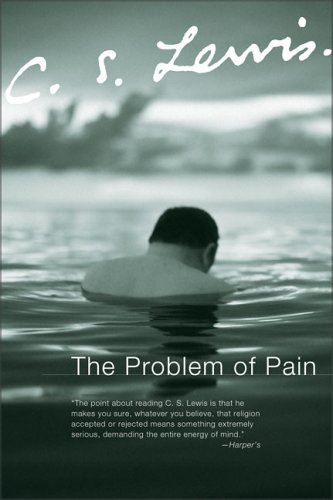
The Problem of Pain
I just finished reading C.S. Lewis’s The Problem of Pain, and rather than wait six months to write about a book like I normally do, I thought I’d go ahead and post some brief thoughts.
Compared to some of his other works (Narnia, Mere Christianity, The Screwtape Letters), The Problem of Pain really wasn’t my favorite—parts of it are somewhat hard to follow, there’s a semi-weird chapter on animals, to an extent, he seems to undermine the doctrine of the Fall, and he also suggests a Christology that is lower than I am comfortable with.
Nevertheless, it’s still C.S. Lewis, which means that there is a lot of good stuff in The Problem of Pain. Below are some quotations that I particularly enjoyed…
Free will necessitates suffering:
“Try to exclude the possibility of suffering which the order of nature and the existence of free wills involve, and you find that you have excluded life itself.”On what we wish God was like:(Lewis, p. 25)
“What would really satisfy us would be a God who said of anything we happened to like doing, ‘What does it matter so long as they are contented?’ We want, in fact, not so much a Father in Heaven as a grandfather in heaven—a senile benevolence who, as they say, ‘liked to see the young people enjoying themselves’, and whose plan for the universe was simply that it might be truly said at the end of each day, ‘a good time was had by all’.”One of the more famous C.S. Lewis quotes that I had heard and like before but never knew where it came from is found in The Problem of Pain:(p. 31)
“A man can no more diminish God’s glory by refusing to worship Him than a lunatic can put out the sun by scribbling the word ‘darkness’ on the walls of his cell.”Lewis suggests and then explains what he calls “the humility of God”:(p. 46)
“…It is a poor thing to strike out colors to God when the ship is going down under us; a poor thing to come to Him as a last resort, to offer up ‘our own’ when it is no longer worth keeping. If God were proud He would hardly have us on such terms: but He is not proud, He stoops to conquer, He will have us even though we have shown that we prefer everything else to Him, and come to Him because there is ‘nothing better’ now to be had…It is hardly complimentary to God that we should choose Him as an alternative to Hell: yet even this He accepts.”Is it suffering of good people the hardest thing to explain? For Lewis, the answer is “no”:(pp. 95-96)
“The sacrifice of Christ is repeated, or re-echoed, among His followers in very varying degrees, from the cruellest martyrdom down to a self-submission of intention whose outward signs have nothing to distinguish them from the ordinary fruits of temperance and ‘sweet reasonableness’. The causes of this distribution I do not know; but from our present point of view it ought to be clear that the real problem is not why some humble, pious, believing people suffer, but why some do not.”On the Christian’s submission of his own will:(p. 104)
“Christian renunciation does not mean stoic ‘Apathy’, but a readiness to prefer God to inferior ends which are in themselves lawful. Hence the Perfect Man brought to Gethsemane a will, and a strong will, to escape suffering and death if such escape were compatible with the Father’s will, combined with a perfect readiness for obedience if it were not.”An allusion to the “least of these” passage in Matthew 25 and the ethical implications of following Jesus:(p. 113)
“In the fullest parabolic picture which He gave of the Judgement, Our Lord seems to reduce all virtue to active beneficence: and though it would be misleading to take that one picture in isolation from the Gospel as a whole, it is sufficient to place beyond doubt the basic principles of the social ethics of Christianity.”And in reference to the flak that Christians often take for their hope of heaven (I love this quote):(p. 114)
“We are very shy nowadays of even mentioning heaven. We are afraid of the jeer about ‘pie in the sky’, and of being told that we are trying to ‘escape’ from the duty of making a happy world here and now into dreams of a happy world elsewhere. But either there is ‘pie in the sky’ or there is not. If there is not, then Christianity is false, for this doctrine is woven into its whole fabric.”Of course, there are other good parts to the book, but the excerpts above at least give a taste of the book’s contents.(p. 149)
Posted by: Luke Dockery at 9:04 AM 3 comments
Filed in: Books, C.S. Lewis, Reading, Reviews, Suffering, Theology
8.25.2011
Martin Hengel’s Crucifixion
A while back, I read Martin Hengel’s Crucifixion, which is a short little book that gives scholarly treatment to the practice of crucifixion in the ancient world. In some ways, I was a little disappointed—I had hoped for more of a detailed description of what a “historically accurate” crucifixion looked like, and Hengel didn’t really provide that (largely because crucifixion was a widespread practice in the ancient world that differed depending on time, location, and whim). That being said, the book was very interesting, specifically in three respects:
(1) Crucifixion as a deterrent:
In the Roman Empire, crucifixion was rarely used on Roman citizens and was primarily used on criminals of the lowest classes and slaves. This is pretty common knowledge, and Hengel supports it. What is particularly fascinating is the degree to which Hengel argues that the use of crucifixion on slaves was a means of stirring up fear among the enslaved in hopes of preventing any sort of rebellion. In places like Rome, where the slave population outnumbered those who were free, the fear of rebellion was real, and keeping the slaves paralyzed with the fear of crucifixion was seen as necessary.
(2) Crucifixion as taboo:
Hengel also makes the argument that crucifixion was so horrific, so feared, and so reviled, that it was essentially the sort of thing that was not talked or written about. This leads to what may seem like a surprising lack of references to it in ancient sources. This lack of references doesn’t mean that the use of crucifixion wasn’t widespread (it was), but simply that it was so horrible that people avoided writing about it:
“Crucifixion was widespread and frequent, above all in Roman times, but the cultured literary world wanted to have nothing to do with it, and as a rule kept quiet about it.”
(Hengel, p. 38)
(3) Crucifixion (of Jesus) as “folly”:
The overarching claim of Hengel’s book is that the Apostle Paul’s claim in 1 Corinthians 1.18 that the “word of the cross is folly” to unbelievers is a reflection of the repeated reception that Paul would have received as he went about preaching the message of a crucified Christ.
Crucifixion was so hated and despised that, for the ancient world, following and worshipping someone who had been crucified was sheer madness—it was not a message that easily attracted followers. This part of the message has been downplayed somewhat today (largely because we fail to grasp the level of shame and horror associated with crucifixion) but at its core, the message of the gospel is completely shocking:
“…In the death of Jesus of Nazareth God identified himself with the extreme of human wretchedness, which Jesus endured as a representative of us all, in order to bring us to the freedom of the children of God…This radical kenosis of God was the revolutionary new element in the preaching of the gospel. It caused offense, but in this very offense it revealed itself as the centre of the gospel.”
(Hengel, p.89)
This last point alone makes Crucifixion worth the read, as Hengel seeks to reclaim the scandal of Christianity as central to the message of the Gospel—God loved us so much that Jesus identified with the lowest extreme of humanity in order to reclaim us.
Posted by: Luke Dockery at 11:11 AM 6 comments
Filed in: Books, Crucifixion, Jesus, Reading, Reviews, Theology
7.22.2009
Cry, The Beloved Country
I read Alan Paton’s Cry, The Beloved Country at the beginning of the summer and meant to write about it long before now, but then the summer busyness that comes with youth ministry set in and I’m just now getting around to it.Cry, The Beloved Country is set in South Africa in the late 1940s, before apartheid, but certainly in a time of profound racial strife.
The book touches on several heavy themes—racism, theology, politics, the breakdown of the native village, crime, environmental concerns, and others—but I just want to focus on one quote that I really liked.
While in Johannesburg, Kumalo becomes close friends with Umfundisi Msimangu, a younger priest who helps him in his search and comforts him as he endures one heartbreaking discovery after another. Time and time again, Msimangu goes out of his way to help Kumalo in any way that he can.
At one particular moment in the book, the old priest is so moved by the overwhelming love and kindness that the younger priest shows him that he begins to pay him a compliment. Kumalo tells Msimangu that he has never known anyone like him, but before he can go on, the young priest interrupts his compliment and rebukes him, saying, “I am a weak and sinful man, but God put His hands on me, that is all.”
Instead, we should have the attitude of Msimangu. He wasn’t willing to take credit for his good deeds, but instead said that it was God’s influence in his life that made those deeds possible. That’s how we should be. We should strive to show the world that any difference or “betterness” on our part isn’t because of us—it’s because Jesus changes our hearts and allows us to be different.
“I am a weak and sinful man, but God put His hands on me, that is all.”
Posted by: Luke Dockery at 3:00 PM 2 comments
Filed in: Alan Paton, Books, Cry The Beloved Country, Racism, Reviews, Theology
6.15.2009
1984
After planning to do so for a long time, I finally got around to reading George Orwell’s 1984. I must say, I was disappointed.I realize it was written in the late 1940s and that this was a scary time, but Orwell seems more than a little bit pessimistic.
On second thought, considering the clothing trends, popular music and hairstyles of choice of the 1980s, maybe Orwell’s prediction was somewhat rosy by comparison.
Posted by: Luke Dockery at 9:20 PM 2 comments
Filed in: 1984, Books, George Orwell, Humor, Reviews
5.05.2009
The Curious Incident Of The Dog In The Night-Time
A while back I read Mark Haddon’s The Curious Incident of the Dog in the Night-Time, which I had heard of before, but knew absolutely nothing about.
The book is told through the eyes of a 15 year-old English boy named Christopher who falls somewhere along the spectrum of autism (his exact condition is never specified). The title of the book comes from a Sherlock Holmes story, and Christopher attempts to use Holmes’ methods to solve the murder of his neighbor’s pet poodle.
For the most part, the book has received very positive reviews, though if you go to Amazon you’ll find some reviewers who are completely opposed to it on the grounds that Haddon’s portrayal of autism is grossly inaccurate and that he just adds to the unfortunate stereotypes about autistic individuals that already exist.
I think that’s a largely baseless criticism—the word autism is broad enough and spans enough conditions that an autistic character like Christopher could certainly exist, and besides, what would these critics have Haddon do instead? Even if his protagonist were based on a specific real life individual, critics could still accuse him of stereotyping since no specific case of autism will ever be representative of all others.
The real problem with the book is the fact that the plot is somewhat lacking. Christopher actually solves the murder of the dog relatively early in the book, and the rest is spent sorting through his difficult family problems. It’s not poorly written and the unfolding drama is interesting enough, but I kept waiting for an exciting twist that never came.
Instead of the great downfall of the book as these reviewers make it out to be, the character of Christopher is absolutely what makes The Curious Incident worth reading. Haddon lets the reader get into his main character’s head in a way that is both fascinating and endearing.
If you’re looking for a page-turning mystery thriller, The Curious Incident of the Dog in the Night-Time isn’t it. On the other hand, if you’d be interested in a pretty neat book about a really neat kid, I’d recommend it.
Posted by: Luke Dockery at 3:44 PM 5 comments
Filed in: Amazon.com, Autism, Books, Mark Haddon, Reviews, The Curious Incident Of The Dog In The Night-Time
4.21.2009
The Shack
If you haven’t read The Shack, the wildly popular Christian fiction book by William P. Young, you’ve probably heard about it. I had certainly heard about it quite a bit, from several different sources, and finally decided to read it.
Put very basically, the story is about a father who experiences a horrific family tragedy, and whose faith in God is shaken as a result. He is invited to spend a weekend with God at a remote shack where God (personified in various forms) works on healing his wounds and his relationship with the Creator.
My reaction to the book was pretty much what I expected: The Shack is written by a well-meaning author who is attempting to help people through difficult times, but it is a book which, upon close examination, has some serious theological problems. Young seems to espouse an unorthodox view of the Trinity (the kind that makes Muslims think that Christians are polytheistic), the Incarnation (he implies that God the Father became human as well as Christ), and he downplays the holiness of God, at one point having God claim that He doesn’t need to punish sin. And perhaps my biggest problem with The Shack, at least from a practical standpoint, is that it seems to suggest that it’s necessary to have some sort of miraculous, face-to-face interaction with God to get through rough times. For people reading the book looking for comfort, I would think that suggestion would be less than helpful.
As I said before, I think Young is well-meaning, and I tend to think that by trying to simplify the nature of God into understandable human characters, he ends up making implications that he himself doesn’t actually believe. Simply put, it’s hard to simplify the concept of God without distorting who He is in some way.
For all the negatives though, there were a few times when I thought The Shack hit the nail on the head.
On the death of Jesus on the cross (this makes more sense if you know that Young is portraying God as a motherly-type woman in this scene):
“Mack struggled for the words to tell her what was in his heart. ‘I’m so sorry that you, that Jesus, had to die.’On how we change into being who God wants us to be:
She walked around the table and gave Mack another big hug. ‘I know you are, and thank you. But you need to know that we aren’t sorry at all. It was worth it.’”
“This whole thing is a process, not an event. All I want from you is to trust me with what little you can, and grow in loving people around you with the same love I share with you. It’s not your job to change them, or to convince them. You are free to love without an agenda.”And on God causing (or not) bad things to happen:
“Mack, just because I work incredible good out of unspeakable tragedies doesn’t mean I orchestrate the tragedies. Don’t ever assume that my using something means I caused it or that I need it to accomplish my purposes.”I probably won’t be recommending The Shack to many people, and I certainly won’t hold my breath waiting for Young to come out with a new book, but I was glad to find some good points in a book that wasn’t one of my favorites.
Posted by: Luke Dockery at 8:44 AM 6 comments
Filed in: Books, Reviews, The Shack, Theology, William P. Young
4.03.2009
Robinson Crusoe On Repentance
Considered by many to be the first novel written in English, Robinson Crusoe is an interesting tale of a man (who the book is named after) who lives for over 20 years by himself on a deserted island after being shipwrecked there.
One thing that surprised me a little bit was how much of the book was dedicated to Robinson’s thoughts on theology. He considers a few topics (sin, repentance, providence, the extent to which God reveals Himself in nature vs. revelation in scripture), and over the course of his time on the island, becomes very devout in his desire to follow God.
Unfortunately, these religious passages grow a little tedious, as Crusoe basically makes the same arguments over and over. However, I liked the following thoughts on sin and repentance:
“…I have since often observed how incongruous and irrational the common temper of mankind is, especially of youth, to that reason which ought to guide them in such cases—namely, that they are not ashamed to sin, and yet are ashamed to repent; not ashamed for the action for which they ought justly to be esteemed fools, but are ashamed of the returning, which only can make them be esteemed wise men.”I think he’s right on target here. So often we fail to admit that we’re in the wrong because of how it will make us look. We don’t generally have the same qualms when we misbehave in the first place.
Posted by: Luke Dockery at 4:42 PM 2 comments
Filed in: Books, Daniel Defoe, Repentance, Reviews, Robinson Crusoe, Theology
3.24.2009
The Hitchhiker’s Guide To The Galaxy
I’d heard countless references to Douglas Adams’ The Hitchhiker’s Guide To The Galaxy during my lifetime, and I knew it had something of a cult following, but I really didn’t know anything about it until I read it a few weeks ago.Now having read it, the only thing I can really say is:
It stinks. I think it might be the most mind-numbingly stupid, plotless book I have ever read.
It did succeed in getting me to laugh a couple of times, but since it tried to get me to laugh dozens and dozens of times, this doesn’t seem like much of a success either.
I know it’s a popular book, but really, I don’t get its popularity at all. If you’re a Hitchhiker fan, I hope I haven’t offended you, but maybe you can explain to me why it shouldn’t be considered a strong contender for The Worst Book Ever Written?
Posted by: Luke Dockery at 2:08 PM 6 comments
Filed in: Books, Douglas Adams, Humor, Reviews, Science Fiction, The Hitchhiker’s Guide To The Galaxy
3.11.2009
The Power And The Glory
The Power and the Glory is considered by many to be Graham Greene’s finest work, and after reading it myself, I can see why.The story centers on a nameless “whiskey priest” who is being persecuted by a ruthless government in a Mexican state in the 1930s. The priest makes an interesting protagonist, and is the vehicle used by Greene to examine the nature of sin, repentance, faith and other deep issues.
If any of these issues interest you, I highly recommend The Power and the Glory. It’s great.
I’ll leave you with one quote I liked a bunch:
“It was for this world that Christ had died; the more evil you saw and heard about you, the greater glory lay around the death. It was too easy to die for what was good or beautiful, for home or children or a civilization—it needed a God to die for the half-hearted and the corrupt.”
Posted by: Luke Dockery at 3:15 PM 4 comments
Filed in: Books, Graham Greene, Reviews, The Power and the Glory, Theology
3.02.2009
The Catcher Was A Spy
For a while I’ve been meaning to write a post on Nicholas Dawidoff’s The Catcher Was A Spy.The story focuses on the life of Moe Berg, a back-up Major League catcher who later became a spy for the OSS (precursor to the CIA) during World War II.
I received the book over 11 years ago on my 14th birthday (Seriously? That was 11 years ago?!), but after a previous false start back in 1997, didn’t get around to reading it until this past Christmas.
Part of the reason for it taking me so long to get around to reading the book was a poor assumption on my part. When I tried to read it the first time around, I abandoned the book at the point when Berg retired from baseball, not realizing that his work as a spy would be considerably more fascinating than his life as a ballplayer.
Rather than post a series of quotes from the book, I’ll leave off with the main effect that the story of Moe Berg produced in me.
Sometimes, I feel like I live a small life. My work can seem unimportant and unnoticed, my life unspectacular and relatively obscure. I think a lot of people feel the same way.
As a professional athlete and an undercover spy, Berg experienced not one, but two exciting, storybook careers. He was an immensely talented individual who had a number of famous friends and acquaintances and his own share of fame as well. In short, Moe Berg had the type of life that most people dream about having.
Despite all that, the portrait that Dawidoff paints is of a largely unhappy man who never really fit in anywhere and was never able to develop deep long-lasting relationships with anyone.
The Catcher Was A Spy is a fascinating biography that I would recommend to anyone with an interest in baseball, espionage or nuclear physics (Berg’s WWII spy work centered on the Nazi Atomic Bomb project), but that wasn’t why I liked it so much.
I liked it because, at least for me, it served as an invaluable reminder about what really matters in life.
Posted by: Luke Dockery at 1:23 PM 0 comments
Filed in: Baseball, Books, Espionage, Moe Berg, Nicholas Dawidoff, Reviews, Sports, The Catcher Was A Spy
11.25.2008
Youth Ministry and The Catcher In The Rye
A while back, I finished reading The Catcher In The Rye. Once the most censored and challenged books in America, The Catcher In The Rye is a common staple in high school English classes, and by today’s standards, is really fairly tame (which I guess is sad, but I digress).
I think the book is pretty good, but not brilliant, and if it hadn’t been so widely censored and criticized, I doubt it would be nearly as popular and well thought of as it is. Nevertheless, I do like the passage in the book that generates the title.
One of the main themes of the book is the loss of innocence, and the main character, Holden Caulfield, is distressed by the idea of children growing up and becoming “phony.”
In one scene, he imagines himself saving them from that:
“Anyway, I keep picturing all these little kids playing some game in this big field of rye and all. Thousands of little kids, and nobody’s around—nobody big, I mean—except me. And I’m standing on the edge of some crazy cliff. What I have to do, I have to catch everybody if they start to go over the cliff—I mean if they’re running and they don’t look where they’re going I have to come out from somewhere and catch them. That’s all I do all day. I’d just be the catcher in the rye and all. I know it’s crazy, but that’s the only thing I’d really like to be.”As a youth minister, I can sympathize with his feelings. Part of being a youth minister is encouraging kids to stay away from stuff that’s not good for them, physically and spiritually.
But unfortunately, as Holden realizes, you can’t catch kids before they fall off the cliff. They’re going to be exposed to things you were wish they weren’t and they’re going to fail and make poor decisions.
The key then is to prepare them to be the kind of people who make good decisions more often than not, and to try to “catch” them until then.
That’s good youth ministry, I think.
Posted by: Luke Dockery at 3:28 PM 4 comments
Filed in: Books, Reviews, The Catcher In The Rye, Work, Youth Ministry
10.02.2008
The Master Of Ballantrae
Sunday night, I finished Robert Louis Stevenson’s The Master of Ballantrae.I’m a fan of Stevenson—I’ve written before how much I appreciate his work, and The Strange Case of Dr. Jekyll and Mr. Hyde is one of my all-time favorite works of fiction—but I was a little disappointed in this one.
The Master of Ballantrae is a tale of two brothers of noble Scottish birth, and is alsosomewhat of a retelling of the Biblical story of Jacob and Esau, with the rivalry and conflict between the two brothers being the central plot of the story.
Parts of the book read very slowly, but there is a lot to keep the reader interested as well: the setting jumps all over the place, with events unfolding in Scotland, the High Seas, India, and finally colonial America, and as with other Stevenson stories, multiple narrators are used, which helps to give different perspectives on events.
Perhaps most interesting of all is the character of the older brother, The Master of Ballantrae himself, who is the antagonist of the story.
Stevenson thoroughly investigated the nature of evil in the character of Mr. Hyde, but in The Master of Ballantrae, the idea is a little more complex. Speaking of his villain, Stevenson said,“The Master is all I know of the devil,” and indeed, the Master’s intelligence, powers of manipulation and seductive charm resemble greatly the malevolent force described in the Bible, and distinguish him from a Mr. Hyde type of evil.
Unfortunately, for me, all of these good aspects of the book were wasted to some degree by an incredibly disappointing climax.
If you’re a big Robert Louis Stevenson fan, The Master of Ballantrae might be worth reading, but otherwise, skip it—he has much better stuff to offer.
Posted by: Luke Dockery at 11:24 AM 4 comments
Filed in: Books, Reviews, Robert Louis Stevenson, Theology
9.26.2008
Pandora.com
Am I the last person in Western Civilization to find out about Pandora.com?
In case the answer to that question is “no,” Pandora is an internet radio service that allows you to create your own “stations” which play music that you like.
You start by picking a song or artist that you like, and then Pandora chooses similar music. As each song plays, you can either give it a “thumbs up” or a “thumbs down”, determining if that specific song and others like it will appear again on your station.
The service is completely free; you just have to register with a username and password in order to save your stations.
I haven’t used it enough to figure out just how good it is at predicting songs that I like, but so far, I’m impressed.
8.08.2008
Ordinary Men
Sometime last month I finished reading Ordinary Men: Reserve Police Battalion 101 and the Final Solution in Poland byChristopher Browning, and the experience was disturbing enough that it sent me running to the comforts of Star Wars books for the next couple of weeks.
Ordinary Men is an in-depth study of German Reserve Police Battalion 101, and the way it was used to massacre and round up Jews for deportation to death camps in Poland during World War II.
It isn’t exactly an easy read—long sections of (necessary) background information explaining Nazi policy and wartime police organization plagued by unfathomably long German words are juxtaposed with matter-of-fact accounts of the commission of unspeakable atrocities. But Ordinary Men succeeds in making its point.
That point—that ordinary people placed in unusual circumstances are capable of doing terrible things—is not an unusual one (think Lord of the Flies or Heart of Darkness), but it’s a point that is driven home with more force than usual because this time, it clearly is rooted in historical fact.
Browning argues that the men of Reserve Police Battalion 101 weren’t your stereotypical uber-Nazis. For the most part, they were middle-aged men, rejected by the army and without Nazi party affiliation who were old enough to remember when Nazis weren’t in power and Nazi ideals weren’t the norm. As a whole, they weren’t especially racist, they hadn’t been thoroughly indoctrinated with Nazi propaganda, and they weren’t battle-hardened. They were just ordinary men.
And yet, the vast majority of them found it easier to kill Jews than to stand out from the group.
As Browning concludes:
“…The collective behavior of Reserve Police Battalion 101 has deeply disturbing implications.
There are many societies afflicted by traditions of racism and caught in the siege mentality of war or threat of war. Everywhere society conditions people to respect and defer to authority, and indeed could scarcely function otherwise. Everywhere people seek career advancement. In every modern society, the complexity of life and the resulting bureaucratization and specialization attenuate the sense of personal responsibility of those implementing official policy. Within virtually every social collective, the peer group exerts tremendous pressures on behavior and sets moral norms.
If the men of Reserve Police Battalion 101 could become killers under such circumstances, what group of men cannot?”It’s a chilling question to consider. After all, I’ve always considered myself to be fairly ordinary.
Posted by: Luke Dockery at 1:48 PM 4 comments
Filed in: Books, Christopher Browning, Final Solution, Holocaust, Nazis, Ordinary Men, Reviews, World War II
7.24.2008
The Dark Knight: Worth The Wait
In general, I’m a fan of the superhero genre, but I thought The Dark Knight freed itself of that classification—it was a really good movie that just happened to be about a superhero.
I thought Heath Ledger was outstanding, and that he gave an original interpretation of the Joker which was truly frightening. I know that some people are criticizing the suggestion that he deserves an Oscar nod as being overly sentimental, but I doubt you’ll see many performances that are better, and the fact that it was in a movie that is sensationally popular (a characteristic that is often looked down upon by award voters) shouldn’t be held against him.
As the title implies, the Dark Knight is a very dark movie, darker maybe than a lot of people are comfortable with, but I think that’s its great strength. Against a backdrop of larger than life characters, fantastic car chases, vicious fight scenes, and devastating personal tragedy, it delivers a dark and startling message that should make us all think.
There is a constant struggle between Good and Evil, and that struggle is complicated by the fact that Good can’t resort to the same methods to win that Evil can. If it does, it loses its goodness, and ultimately, the cause it was fighting for in the first place.
It’s a lesson that Batman learns, and at a high price.
If you haven’t seen it yet, do. I’m actually considering going a second time myself…
Posted by: Luke Dockery at 9:41 AM 2 comments
Filed in: Batman, Heath Ledger, Movies, Reviews, The Dark Knight
6.25.2008
The Teammates
Baseball has not been quite as appealing to me this year.The steroid sagas of Clemens and Bonds have left me a bit cynical, the season-ending injury to John Smoltz and Atlanta’s inability to win one-run games has left me depressed, and TBS’ decision to no longer broadcast Braves games has left me out of touch.
But two things have kept me interested: Chipper Jones’ impressive run at .400 (maybe I’ll write about that later), and one of the best baseball books I have ever read, The Teammates, by David Halberstam.
The Teammates tells the story of four Boston Red Sox icons—Ted Williams, Dominic DiMaggio, Bobby Doerr and Johnny Pesky—the years they played together and the friendship they shared, which spanned 50 years.
In October of 2001, when Williams fell ill and his friends knew it was near the end, they traveled 1,300 miles by car to see him one more time.
Much of the book focuses on Ted Williams, the leader of the group, and possibly the greatest hitter in baseball history. On the relationship between Williams and Joe DiMaggio, Ted’s rival as the other dominant player of the 30s and 40s, Halberstam writes:
“The two had not been close when they played. Joe DiMaggio was the most aloof of men; he held out genuine warmth of friendship not even to his younger brother or his long-time teammates, let alone to Ted Williams, the one baseball player against whom he was constantly measured. Ted, by contrast, was far more open, far more generous, and far more volatile. After they quit playing his only real connection to Joe, other than through his admiration for him and his love of Joe’s younger brother, was the fact that for some 50 years they stood together atop the same pedestal of excellence, honored and celebrated at countless baseball dinners, posing for a seemingly endless number of photographs reflecting baseball’s royalty from an earlier age.
Because they had shared so much of an era, even if they had shared nothing else, their mortality was in some curious way a shared one; if they were linked in life by greatness then they would surely be linked in their obituaries. If Joe, who was nearly four years older than Ted, was dying, then Ted's mortality was at stake as well. The imminent death of Joe DiMaggio meant that an era that belonged to Ted, as much as it did to Joe, was coming to an end. Thus when Joe’s health began to fail badly in the fall of 1998, and when it became clear that he was dying, Ted was deeply moved and his regular phone calls to Dominic started, always at the same time of day. As soon as the phone rang, Dominic knew it was Ted calling about Joe, wanting to know how he was, whether he was doing any better, asking what the doctors were saying. When Joe died, Ted took it, his friends realized with surprise, like a death in his extended family.”Halberstam had interviewed Williams before for another book, and had come to know him pretty well:
“I have this view of him now, and it was beginning to form back then, that…he was not a modern man, had always gone his own way, always outside the bounds of contemporary society, and had been so absolutely true to himself. He did not wear ties to tie-certified events. He had crash-landed his plane in Korea once because he thought that there was a better chance to preserve his body that way than if he parachuted out, which might have been harder on his legs. It was a bet, and he had won. He always, if you think about it, bet on himself. He did not go around doing things that would make him popular; instead, even when there were things about him that were appealing, he tended to keep them to himself. He was always his own man.
I think in that sense the .406 is special and defining, not that he was the last man to accomplish it, but much more important was the way he did it. On the last day of the season, Boston faced the Philadelphia Athletics in a doubleheader and Ted’s averaged rounded out to .400 and Joe Cronin offered him the day off. But Ted Williams did not round things out, and he had played, gotten six hits, and taken the average up to .406.”On the journey of three men who are desperate to see Williams one last time:
“The voyage of Dominic, John, and Dick Flavin from Marion to Hernando took three full days. All three men in the car were proud that they never turned the radio on, not once. Dominic loved the opera and had brought along a few tapes, and on occasion they played one, mostly Pavarotti and Domingo. But never the radio. There was just too much to say, too much to reminisce about, and they knew they would never be together again like this. This was the last time.”Ted was in awful shape by the time his friends arrived, but just being with them again brought about a change in him, and for a while, again made everything as it should have been:
“Now, in his wheelchair, Ted was suddenly in charge again. It was fascinating to watch him become stronger by the minute with the arrival of his friends. He had to take charge, of course, because that was the natural order of things and that was what his friends wanted.”I thought The Teammates was an amazing book, sometimes humorous, often poignant, and always interesting. Halberstam truly is a poet, and uses the story of four old-time ballplayers to talk about the things that are really important in life.
Posted by: Luke Dockery at 8:58 AM 2 comments
Filed in: Baseball, Books, David Halberstam, Reviews, Sports, Ted Williams, The Teammates
6.14.2008
Don’t Waste Your Time
I enjoyed every M. Night Shyamalan movie I had ever seen (although I didn’t see the critically maligned Lady in the Water), so I was expecting a good movie, but boy, was I disappointed.
The plot was lacking, the dialogue was terrible, the acting was suspect—it was bad all around.
Don’t spend the $8 to see it in theaters.
Don’t spend the $3 to rent it when it comes out on DVD.
Don’t waste a spot on your Netflix cue for it.
In fact, if you’re walking on the street six months from now and happen to see a copy of The Happening lying on the ground, don’t even bother to pick it up.
It really was that bad.
Posted by: Luke Dockery at 11:36 AM 4 comments
Filed in: Humor, M. Night Shyamalan, Movies, Reviews, The Happening
6.02.2008
Harrison Ford, Propagandist
The plot was far-fetched, and there were parts that were absolutely ludicrous, but really, since when do we go to Indiana Jones seeking realism?
All in all, I thought Crystal Skull fit in pretty well with the other three movies in the Indiana Jones franchise. It may have been the worst of the four, but it didn’t shame the series or anything like that.
Well, that’s just my opinion—the Communist Party of Russia apparently disagrees.
According to this article, they sent an open letter to Harrison Ford calling for Crystal Skull to be removed from Russian theaters and condemning it as “anti-Soviet propaganda.”
The film is set in 1957, and with no more Nazis left to fight, Indy finds himself competing with a group of vicious Soviet agents to find a mystical crystal skull in Peru.
The letter to Ford takes great exception to this, reminding him that, “in 1957 the USSR was not sending terrorists to America but sending the Sputnik satellite into space!”
It’s a year Soviets remember clearly—after Sputnik, everything was pretty much downhill.
Oh and by the way, so far, the Communist Party’s pleas seem to have fallen on deaf ears: Crystal Skull is being shown on over 800 screens in Russia, which is the most ever for a foreign film.
Posted by: Luke Dockery at 8:26 AM 4 comments
Filed in: Cold War, Communists, Harrison Ford, Humor, Indiana Jones, Movies, Politics, Reviews, Soviets, USSR
My Profile
Followers of The Doc File
Popular Posts
-
The Book of Job is widely regarded as one of the great written masterpieces of history, equally impressive for the depth of the issues it ...
-
The Gospel of John focuses on the revelation of Jesus as the Father’s Son, and stresses the necessity of believing in him in order to receiv...
-
During the last few centuries, the Old Testament books of Kings and Chronicles have come under intense scrutiny as their historical reliabil...
-
Sixty-two years ago today, on April 15, 1947, Jackie Robinson integrated Major League Baseball. Robinson’s 10-year career had an unquestione...
-
About 15 months ago now, the hard drive on my MacBook suddenly and inexplicably failed. This led to a couple of incredibly frustrating...
-
“The old game waits under the white , Deeper than frozen grass . Down at the frost line it waits To return when the birds return . It start...
-
So, I turn 30 tomorrow. Knowing for some time that this day has been coming, I have had a lot of opportunity for reflection and a v...
-
Somehow you’ve managed to stumble upon my blog—welcome! My name is Luke Dockery. In addition to being the author of The Doc File, I...